
Draw The Products Of The Following Reaction
Draw The Products Of The Following Reaction - H3c−c≡c−hh2o2 / aqueous naoh 1. You do not have to explicitly draw h atoms. The mechanism of a chemical reaction is the sequence of actual events that take place as reactant molecules are converted into products. Sn1, sn2, e1, and e2 reactions form the basis for understanding why certain products are more likely to form than others. Drawing particulate models of reaction mixtures (video) | khan academy. Ap®︎/college chemistry > unit 4.
• consider e/z stereochemistry of alkenes. Draw the major product(s) of the following reaction. Identify which is wrong and explain why. Draw the product (s) of the following reactions. In most cases, formation of the.
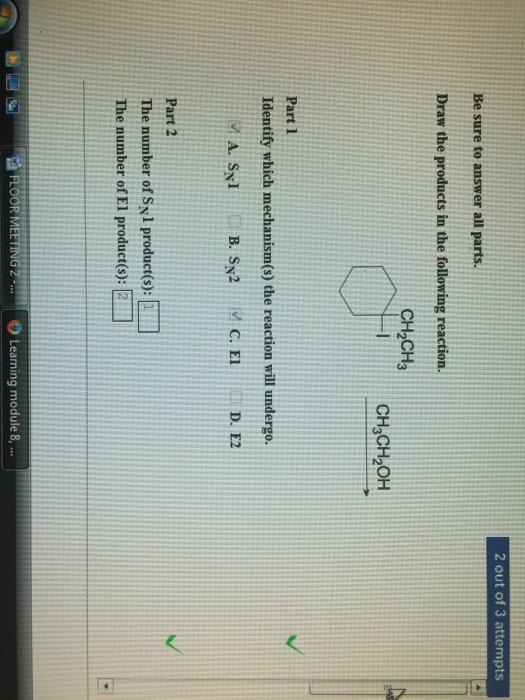
Solved be sure to answer all parts. draw the products in the
H2/pd ch30 you do not have to consider stereochemistry. • consider e/z stereochemistry of alkenes. Draw the product (s) of the following reactions. Draw the products of the following reactions: Ap®︎/college chemistry > unit 4.

Solved Draw the products in the following reaction.
Draw the major product(s) of the following reaction. Draw the product (s) of the following reactions. Draw the product(s) of the following reactions: The following two sets of reactions (a and b) show possibilities for arrow pushing in individual reaction steps. Identify which is wrong and explain why.

Solved Draw The Organic Products Of The Following Reaction.
If one product is more stable, circle it. Draw the products of the following reactions, including all stereoisomers: The mechanism of a chemical reaction is the sequence of actual events that take place as reactant molecules are converted into products. We will learn about the reaction mechanisms, and how. Draw the product (s) of the following reactions.

Solved Draw the organic product of the following reaction.
Each of these events constitutes an. Draw the products of the following reactions, including all stereoisomers: This problem has been solved! • consider e/z stereochemistry of alkenes. Draw the product (s) of the following reactions.

Solved Alcohols can act as either acids or bases, similar to
Draw the major product(s) of the following reaction. In most cases, formation of the. The product formed when the bond to h is broken is called the conjugate base. H2/pd ch30 you do not have to consider stereochemistry. This problem has been solved!
Draw The Products Of The Following Reaction - Predict the products of the following polar reaction, a step in the citric acid cycle for food metabolism, by interpreting the flow of electrons indicated by the curved arrows: Draw the products of the following reactions. • consider e/z stereochemistry of alkenes. Draw the product (s) of the following reactions. The following two sets of reactions (a and b) show possibilities for arrow pushing in individual reaction steps. Ap®︎/college chemistry > unit 4.
Draw the product (s) of the following reactions. Draw the major product(s) of the following reaction. Identify which is wrong and explain why. In most cases, formation of the. The mechanism of a chemical reaction is the sequence of actual events that take place as reactant molecules are converted into products.
In The Following Cases, More Than One Elimination Product Is Possible.
Draw the product(s) of the following reactions: Draw the products of the following reactions, including all stereoisomers: Drawing particulate models of reaction mixtures (video) | khan academy. H2/pd ch30 you do not have to consider stereochemistry.
This Problem Has Been Solved!
The following two sets of reactions (a and b) show possibilities for arrow pushing in individual reaction steps. Acids and bases acids and bases. Each of these events constitutes an. Understanding the location of electrons and being able to draw the curved arrows that depict the mechanisms by which the reactions occur is one of the most critical tools for.
You Do Not Have To Consider Stereochemistry.
• consider e/z stereochemistry of alkenes. Draw the product (s) of the following reactions. Draw the products of the following reactions. Draw the product (s) of the following reactions.
You Do Not Have To Explicitly Draw H Atoms.
Identify which is wrong and explain why. Draw the product (s) of the following reactions. Ap®︎/college chemistry > unit 4. The mechanism of a chemical reaction is the sequence of actual events that take place as reactant molecules are converted into products.